 AR
 DE
 FR
 IT
How Energy Costs Are Collapsing Italian Industrial Districts
Introduction
How Energy Costs Are Collapsing Italian Industrial Districts
Navigating the structural energy crisis
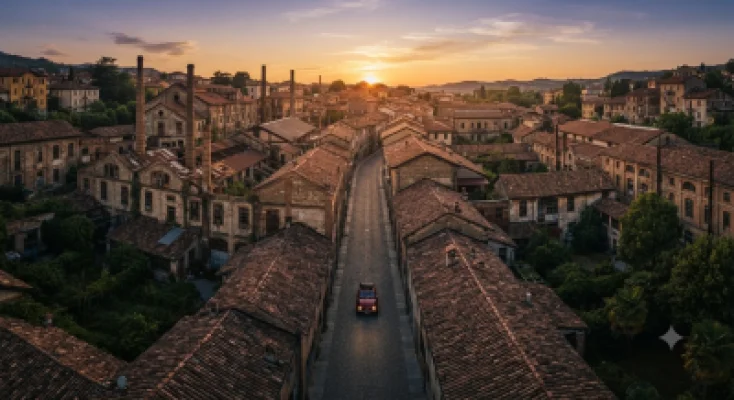
The historic manufacturing districts of Italy face unprecedented pressure from soaring energy costs. Small and medium manufacturers lack the scale to negotiate favorable contracts, leading to reduced production and temporary closures across the nation.
📊 Executive Summary
The Italian industrial model has long relied on localized clusters of highly specialized small and medium-sized enterprises. These districts thrive on dense networks of subcontractors and shared supply chains. However, this geographic concentration has become a vulnerability in the face of the wider eu energy cost crisis. Unlike decentralized multinational corporations, these localized factories are tied to specific regional grids and gas pipelines, leaving them entirely exposed to localized infrastructure bottlenecks and national pricing mechanisms. The italian manufacturing energy crisis is particularly acute in these zones because the machinery used in precision engineering and textile weaving is inherently power-hungry. When wholesale energy prices spike, the operating margins of these family-owned businesses evaporate within weeks. Many factory owners report that their monthly utility bills now rival their payroll expenses, a structural shift that makes traditional cost-accounting obsolete. Furthermore, the aging infrastructure of italian industrial zones exacerbates the problem, as inefficient local distribution networks add hidden surcharges to the final delivered price of electricity. The survival of these historic districts now depends on their ability to radically overhaul their energy procurement and consumption models without losing the artisanal quality that defines their global reputation.
The Structural Vulnerability of Italian Manufacturing
The convergence of macroeconomic energy dependency and localized infrastructure decay creates a hostile environment for mid-sized manufacturers.
Geographic concentration creates localized grid bottlenecks and heavy reliance on specific regional distribution nodes.
The national grid depends heavily on imported natural gas, exposing factories to global spot-market volatility.
Fragmented small manufacturers cannot access the long-term hedging contracts available to large multinationals.
Energy-heavy batch processes are forced to run during peak afternoon hours, maximizing utility expenses.
State relief programs require absolute consumption volumes that arbitrarily exclude highly automated mid-sized SMEs.
High interest rates prevent struggling factories from financing the upfront costs of rooftop solar and efficiency upgrades.
Dense networks of subcontractors multiply the energy cost burden across multiple independent legal entities.
Aging local distribution transformers and cables add significant technical losses and surcharges to the final bill.
Historic Manufacturing Districts Under Pressure
The geographic concentration of Italian industry has transformed from a competitive advantage into a severe structural vulnerability.
The historic manufacturing districts of Italy, from the textile hubs of Veneto to the engineering centers of Modena and Brescia, are currently navigating an unprecedented operational crisis.
The Italian industrial model has long relied on localized clusters of highly specialized small and medium-sized enterprises. These districts thrive on dense networks of subcontractors and shared supply chains. However, this geographic concentration has become a vulnerability in the face of the wider eu energy cost crisis. Unlike decentralized multinational corporations, these localized factories are tied to specific regional grids and gas pipelines, leaving them entirely exposed to localized infrastructure bottlenecks and national pricing mechanisms. The italian manufacturing energy crisis is particularly acute in these zones because the machinery used in precision engineering and textile weaving is inherently power-hungry. When wholesale energy prices spike, the operating margins of these family-owned businesses evaporate within weeks. Many factory owners in Brescia report that their monthly utility bills now rival their payroll expenses, a structural shift that makes traditional cost-accounting obsolete. Furthermore, the aging infrastructure of italian industrial zones exacerbates the problem, as inefficient local distribution networks add hidden surcharges to the final delivered price of electricity. The survival of these historic districts now depends on their ability to radically overhaul their energy procurement and consumption models without losing the artisanal quality that defines their global reputation. The narrative of italian textile districts collapsing under the weight of uncontrollable overheads is becoming a harsh reality for many multi-generational family businesses that lack the capital to pivot quickly.
🎯 The survival of the industrial heartlands of Italy requires a fundamental shift from passive energy consumption to aggressive, collaborative energy management.
💡 Key Takeaways
- Geographic concentration creates grid vulnerability
- Utility bills now rival payroll expenses
- Aging infrastructure adds hidden surcharges
The Burden of Imported Gas Dependency
Italy relies heavily on imported gas, making its manufacturing base acutely vulnerable to global energy price fluctuations.
The structural vulnerability of the Italian manufacturing base stems directly from its historical dependence on imported natural gas to fuel both electricity generation and direct industrial heating processes.
The italian manufacturing energy crisis is deeply rooted in the macroeconomic energy strategy of the country. For decades, Italy phased out nuclear power and relied heavily on combined-cycle gas turbines to generate baseload electricity. This strategic choice means that every time a factory in Sassuolo turns on a ceramic kiln, or a mill in Prato powers a loom, they are indirectly purchasing natural gas on the volatile global spot market. Unlike nations with abundant domestic fossil fuels or massive nuclear fleets, Italian manufacturers absorb the full shock of geopolitical supply disruptions and LNG shipping constraints. The correlation between global gas indices and local factory overhead is nearly one-to-one, leaving zero buffer for SMEs operating on thin margins. This systemic exposure forces Italian industrial zones to operate in a state of perpetual financial anxiety, where a cold snap in Northern Europe or a pipeline maintenance delay in North Africa can instantly render a production run unprofitable. To understand the broader continental impact, one must examine how energy costs are destroying energy-intensive industries across the peninsula. The data clearly illustrates that without a diversified baseload, Italian factories are essentially trading commodities while paying premium prices for the power required to manufacture them. This dependency is far more acute than the issues surrounding dutch gas dependency, as Italy lacks the extensive regional interconnectors that provide buffer capacity.
🎯 Decoupling Italian manufacturing from global gas markets remains the most critical, yet elusive, prerequisite for long-term industrial stability.
💡 Key Takeaways
- Heavy reliance on combined-cycle gas turbines
- Direct exposure to global LNG spot markets
- Lack of diversified baseload power
The SME Bargaining Disadvantage
Small and medium manufacturers in Italian industrial districts lack the scale to negotiate favorable, long-term energy contracts.
The fragmented nature of the Italian industrial base prevents small and medium manufacturers from accessing the favorable, long-term power purchase agreements enjoyed by large multinationals.
In the landscape of italian industrial zones, the vast majority of employers are SMEs with fewer than 250 employees. When these companies approach energy suppliers, they are offered standard retail tariffs that include hefty risk premiums and rigid consumption penalties. Conversely, massive automotive or chemical conglomerates leverage their immense, predictable load profiles to negotiate bespoke, multi-year hedging contracts that lock in favorable rates. This asymmetry in bargaining power creates a two-tiered manufacturing economy. The SMEs, which form the backbone of the Italian export machine, are forced to absorb real-time market volatility, while their larger competitors enjoy insulated, predictable overheads. This disparity is a primary driver behind why italian machinery is losing competitiveness against heavily subsidized or structurally advantaged foreign rivals. The inability to hedge effectively means that an Italian SME producing precision valves cannot guarantee its pricing to international buyers for more than a few months at a time, leading to lost contracts and strained client relationships. Understanding this structural disadvantage is crucial when analyzing the broader continental crisis and its uneven impact across different company sizes. The situation is distinctly different from the burden of belgian energy taxes, which affects all players uniformly, whereas the Italian crisis is heavily skewed by company scale.
| Negotiation Factor | Large Multinational | Italian SME |
|---|---|---|
| Contract Length | 3-5 Years Fixed | 6-12 Months Variable |
| Risk Premium | Minimal (Hedged) | High (Spot Exposure) |
| Load Profile | Predictable & Baseload | Intermittent & Batch |
| Market Access | Direct Wholesale/PPA | Retail Utility Tariffs |
🎯 Overcoming the scale disadvantage requires SMEs to artificially aggregate their demand and present a unified front to energy markets.
💡 Key Takeaways
- Retail tariffs include massive risk premiums
- Inability to hedge destroys pricing stability
- Two-tiered manufacturing economy
High Electricity Costs Forcing Closures
High electricity costs are forcing many SMEs to reduce production or temporarily close their doors entirely.
As utility expenses consume an unsustainable percentage of revenue, many specialized Italian factories are facing the grim reality of temporary shutdowns or permanent insolvency.
The immediate consequence of the italian manufacturing energy crisis is the physical silencing of factory floors. When the marginal cost of producing a single unit exceeds the market price, rational economic actors must halt production. Across the ceramic tiles district of Sassuolo and the textile hubs of Biella, kilns and dyeing vats are being powered down during peak pricing hours, or entirely for weeks at a time. This phenomenon, known as demand response in theory, is experienced as forced idleness by factory owners. The financial strain is pushing multi-generational family businesses to the brink, as fixed costs like equipment leases and property taxes continue to accrue even when the machines are off. This operational paralysis directly contributes to the narrative of italian textile districts collapsing under the weight of uncontrollable overheads. Furthermore, the inability to run continuous shifts destroys the efficiency of capital-intensive machinery, leading to accelerated wear and tear when plants do restart. The psychological toll on the workforce and management is immense, as the traditional Italian model of relentless, high-quality output is replaced by a frantic, daily calculation of whether turning on the power will result in a net loss. This environment also exacerbates the crisis of unfilled manufacturing jobs, as skilled workers leave for more stable industries.
Kiln Shutdowns
Ceramic manufacturers in Sassuolo are halting firing processes during peak afternoon hours to avoid catastrophic spot-market pricing.
Textile Dyeing Delays
Water-heating and dye-fixation processes in Biella are being postponed to weekends, disrupting just-in-time delivery schedules.
Shift Cancellations
Night shifts, traditionally used for energy-heavy batch processing, are being eliminated due to the loss of off-peak tariff advantages.
Insolvency Filings
Specialized subcontractors with single-purpose, high-draw machinery are entering administration at record rates.
🎯 The forced curtailment of production is not just a temporary adjustment, but a fundamental erosion of the reputation of Italy for reliable, high-volume manufacturing.
💡 Key Takeaways
- Forced idleness during peak pricing hours
- Fixed costs accrue during shutdowns
- Accelerated machinery wear and tear
The Limits of the Energy-Intensive Designation
The energy-intensive designation in Italy provides some relief but is not sufficient to maintain competitiveness for mid-sized firms.
The Italian government established the energivoro designation to grant targeted relief, but its stringent qualification thresholds leave many critical manufacturers unprotected.
To mitigate the worst impacts of the crisis, Rome established the energivoro status, which grants significant discounts on general system charges and grid tariffs to qualifying companies. However, achieving this status requires a company to prove that its energy costs exceed a specific percentage of its gross value added, and that its absolute consumption surpasses a high gigawatt-hour threshold. While this successfully protects massive steel mills and paper plants, it completely ignores the reality of the Italian SME manufacturing ecosystem. A highly automated precision machining shop in Modena might consume vast amounts of electricity relative to its physical size, but fail the absolute volume test. Consequently, these mid-sized enterprises are trapped in a regulatory blind spot: they are too large to benefit from residential or small-business micro-generation schemes, yet too small to access the heavy-industry subsidies. This regulatory mismatch accelerates the trend of declining exports, as mid-tier innovators are starved of the capital needed to upgrade their grids. The designation provides a lifeline for the giants, but the backbone of the economy remains exposed to the full force of the market. This is a stark contrast to the failure of french nuclear power to protect manufacturers, as the Italian issue is purely regulatory rather than infrastructural.
✅ Pros
- Significant reduction in grid tariff surcharges for qualifying heavy industries
- Provides temporary cash-flow stabilization for massive continuous-process plants
- Aligns Italian heavy industry closer to the subsidized rates of foreign competitors
❌ Cons
- Absolute consumption thresholds arbitrarily exclude highly automated mid-sized SMEs
- Complex bureaucratic application processes drain management time and external consultancy budgets
- Fails to address the underlying wholesale commodity cost of the electricity itself
- Creates a two-tier system that penalizes the innovative, mid-market manufacturing backbone
🎯 The current relief framework is structurally misaligned with the actual energy intensity and scale of the most vital manufacturing clusters of Italy.
💡 Key Takeaways
- Strict thresholds exclude mid-sized SMEs
- Bureaucratic friction drains resources
- Wholesale costs remain unaddressed
Investing in Energy Efficiency and Renewables
Italian manufacturers are investing heavily in energy efficiency and onsite renewable generation to bypass the volatile national grid.
Faced with existential margin pressure, proactive Italian manufacturers are bypassing the grid by aggressively deploying on-site generation and radical efficiency upgrades.
The most resilient factories in the industrial zones of Italy are those that have treated energy not as a utility, but as a raw material to be harvested and optimized. Recognizing that waiting for macroeconomic stabilization is a losing strategy, forward-thinking SMEs are heavily capitalizing on rooftop solar photovoltaics, advanced heat-recovery systems, and high-efficiency electric motors. In regions like Veneto and Emilia-Romagna, the sprawling, flat roofs of single-story industrial sheds are being rapidly converted into captive power plants. This shift towards self-generation fundamentally alters the unit economics of production, decoupling a portion of the factory output from the volatile national grid. However, this transition requires significant upfront capital, which is difficult to secure when banks view the manufacturing sector as high-risk. Furthermore, integrating intermittent solar power with the continuous, heavy loads of industrial machinery requires sophisticated battery storage and smart inverters. Despite these hurdles, the adoption of on-site renewables is the primary reason some factories are managing to maintain margins while their neighbors face insolvency. This localized micro-generation trend is a critical component of how european factories reduce energy costs without relocating to cheaper, less stable jurisdictions. It represents a massive structural pivot in how the Made in Italy brand is physically produced.
📋 Checklist
🎯 On-site generation and aggressive efficiency retrofits have transitioned from optional sustainability initiatives to mandatory survival tactics for Italian SMEs.
💡 Key Takeaways
- Rooftop solar decouples from grid volatility
- Heat recovery captures wasted thermal energy
- Smart metering eliminates phantom loads
The Power of Energy Purchasing Consortia
Collaboration through energy purchasing consortia allows SMEs to achieve better pricing and access wholesale markets.
To overcome their inherent lack of scale, Italian SMEs are increasingly forming regional energy purchasing consortia to negotiate directly with wholesale generators.
The fragmentation of the Italian manufacturing base is being artificially corrected through the formation of energy buying groups. By pooling the consumption profiles of dozens or hundreds of local workshops, these consortia can present a unified, multi-megawatt load profile to energy traders and independent power producers. This aggregated demand allows the consortium to bypass retail utility markups and access wholesale hedging instruments, forward contracts, and even bespoke corporate Power Purchase Agreements with renewable developers. In the ceramic district of Sassuolo and the textile valleys of Northern Italy, these collaborative models are proving essential. They not only secure better pricing but also provide access to specialized energy managers who can optimize the collective consumption curve, shifting batch processes to align with periods of high renewable generation on the national grid. This collaborative approach is a direct countermeasure to the structural disadvantages highlighted in the broader continental crisis. By acting as a single, massive industrial client, the consortium neutralizes the risk premiums that suppliers normally attach to small, volatile SMEs, effectively democratizing access to sophisticated energy financialization. This is a far more effective strategy than relying on the failure of uk energy price caps to protect industrial consumers.
🎯 Collaborative procurement is transforming isolated, vulnerable SMEs into formidable, unified market participants capable of dictating terms to energy suppliers.
💡 Key Takeaways
- Aggregated demand bypasses retail markups
- Shared management optimizes consumption curves
- Joint PPAs secure long-term renewable power
Shifting to Less Energy-Intensive Processes
Some factories are shifting production to less energy-intensive processes or products to preserve their margins.
When efficiency upgrades and better contracts are insufficient to protect margins, some Italian factories are executing a strategic pivot away from energy-intensive manufacturing.
This structural adaptation is a pragmatic response to the italian manufacturing energy crisis, acknowledging that competing purely on the cost of raw transformation is no longer viable within the European peninsula. It represents a maturation of the Italian industrial model, moving up the value chain to prioritize intellectual property and artisanal finishing over brute-force energy consumption. Companies are increasingly outsourcing their most power-hungry subprocesses to facilities in regions with cheaper, subsidized power, while retaining the high-value, low-energy finishing, assembly, and design work in Italy. This virtual manufacturing model preserves the brand equity and the highly skilled local workforce, while surgically removing the most vulnerable cost centers. However, this shift is often hindered by the impact of italian permit delays when trying to build new assembly facilities, or the reality of italian port backlogs when importing semi-finished goods. Furthermore, the broader labor market challenges, such as why young Italians avoid factory jobs, make it difficult to staff the remaining high-precision finishing roles.
⏱️ Timeline
🎯 The strategic unbundling of the manufacturing process allows Italian firms to retain high-value creation while shedding unsustainable thermal and electrical burdens.
💡 Key Takeaways
- Outsourcing heavy thermal subprocesses
- Retaining high-value design and finishing
- Overcoming local infrastructure bottlenecks
Government Tax Credits and Subsidies
The Italian government has introduced tax credits and subsidies for energy efficiency investments, though access remains uneven.
The Italian state has deployed a complex matrix of tax credits and transition subsidies, though their efficacy is heavily debated among the industrial base.
In response to the acute phases of the crisis, the Italian government introduced the Transizione 5.0 plan, offering substantial tax credits for investments in energy efficiency and on-site renewable generation. The premise is sound: use public funds to accelerate the private sector transition away from fossil fuel dependency. Manufacturers who can demonstrate a measurable reduction in their energy consumption per unit of output can claim credits against their corporate tax liabilities. However, the practical reality on the ground is fraught with friction. The application process requires rigorous, third-party energy audits and complex baseline calculations that deter many SMEs lacking dedicated compliance departments. Furthermore, tax credits only benefit companies that are already generating sufficient taxable profit; struggling factories operating at a loss cannot utilize the credits, rendering the support useless when it is needed most. This structural flaw means the subsidies disproportionately aid healthy companies looking to optimize, rather than rescuing those on the brink of collapse. While the intent aligns with broader European climate goals, the execution often fails to address the immediate, bleeding cash-flow crisis caused by the wholesale cost of the electrons themselves. This dynamic is notably different from the reality of spanish renewables, which have structurally lowered daytime wholesale prices, or the limits of nordic hydropower, which provides a stable but geographically constrained baseload.
The Transizione 5.0 tax credits are highly effective for profitable firms modernizing their fleets, but offer zero liquidity to loss-making SMEs facing immediate insolvency due to spot-market pricing.
Beware of the baseline trap: accurately proving energy savings against historical consumption requires expensive engineering audits that can consume up to 8% of the project total value before a single euro is reclaimed.
Partner with specialized Energy Service Companies (ESCOs) who can finance the upfront capital expenditure and manage the bureaucratic credit reclamation process in exchange for a share of the guaranteed savings.
🎯 State intervention provides a valuable catalyst for long-term modernization but fails to act as an effective emergency tourniquet for acute margin erosion.
💡 Key Takeaways
- Tax credits require taxable profit to be useful
- Engineering audits consume project capital
- ESCOs can bridge the financing gap
Actionable Strategies for Competitiveness
This guide provides Italian manufacturers with actionable strategies to stay competitive within Italy despite the energy crisis.
Surviving the Italian energy crisis requires a transition from passive utility consumption to active, integrated energy asset management.
The path forward for Italian manufacturers demands a complete philosophical shift regarding how energy is procured, consumed, and valued. The era of simply paying the monthly utility bill and focusing entirely on production output is over. To maintain the global competitiveness of italian industrial zones, factory owners must integrate energy strategy into their core business planning. This means treating energy flexibility as a competitive advantage, utilizing smart manufacturing execution systems to dynamically schedule power-hungry batch processes during periods of negative pricing or high solar output. It also requires aggressive participation in regional consortia to leverage collective bargaining power. By combining these operational pivots with strategic investments in on-site generation and state-backed efficiency upgrades, SMEs can build a resilient cost structure that withstands future macroeconomic shocks. The factories that survive this crucible will emerge leaner, more technologically advanced, and fundamentally decoupled from the most volatile aspects of the global fossil fuel market. This proactive adaptation is the only viable alternative to offshoring, ensuring that the legacy of Italian manufacturing endures. This stands in stark contrast to how brexit drained the uk of its industrial base, or why SMEs lose the talent war to large manufacturers who can offer better stability. Furthermore, unlike the shortage of rotterdam warehouse space which forces logistics pivots, the energy crisis forces a fundamental production pivot.
🎯 The integration of energy flexibility and collaborative procurement transforms a fatal vulnerability into a sustainable, competitive moat.
💡 Key Takeaways
- Energy flexibility is a competitive advantage
- Collaborative procurement neutralizes risk premiums
- Strategic unbundling preserves the Made in Italy brand
European and National Relief Mechanisms
Various institutional frameworks have been deployed to shield manufacturers from the worst impacts of the energy crisis.
Italian state subsidies for investments in energy efficiency and on-site renewable generation.
European funding aimed at rapidly deploying solar and heat pumps in industrial zones.
EU state aid rules allowing member states to provide direct liquidity support to energy-intensive firms.
Why Institutional Relief Falls Short
Despite significant capital deployment, structural flaws in relief mechanisms prevent them from saving the most vulnerable SMEs.
⚠️ Requires taxable profit to be utilized, offering zero liquidity to loss-making SMEs facing immediate insolvency.
⚠️ Bureaucratic delays in national transposition and complex permitting stall actual deployment on factory roofs.
⚠️ Favors large corporations with dedicated grant-writing teams, leaving fragmented SMEs unable to navigate the application process.
Industrial Energy Terminology
Frequently Asked Questions
❓ Why are Italian energy costs higher than the EU average?
Italy relies heavily on imported natural gas to generate electricity and lacks a diversified baseload of nuclear or domestic fossil fuels, exposing manufacturers to global spot-market volatility.
❓ What is the energivoro designation?
It is an Italian legal status for energy-intensive industries that grants discounts on grid tariffs, though strict consumption thresholds exclude many mid-sized SMEs.
❓ How do energy consortia help SMEs?
Consortia pool the demand of multiple small factories to negotiate wholesale contracts and long-term hedging instruments normally reserved for massive multinational corporations.
❓ Can solar panels solve the factory energy crisis?
Rooftop solar significantly reduces daytime grid dependence, but must be paired with battery storage and efficiency upgrades to manage the heavy, continuous loads of industrial machinery.
❓ Why are ceramic and textile districts hit hardest?
These industries rely on massive thermal processes, such as kiln firing and water heating, which consume vast amounts of energy compared to mechanical assembly or precision machining.
❓ What government subsidies are available for efficiency?
The Transizione 5.0 plan offers substantial tax credits for energy efficiency investments, but companies must have sufficient taxable profit to actually utilize the credits.
❓ Is offshoring the only solution for Italian manufacturers?
No, many factories are surviving by strategically outsourcing only the most energy-intensive subprocesses while retaining high-value design, finishing, and assembly work in Italy.
❓ How does imported gas affect electricity prices?
Because nearly half of Italian electricity is generated by burning natural gas, any spike in the global price of LNG directly and immediately increases the cost of industrial electricity.