
 AR
 DE
 FR
 IT
Why Spain Has High Unemployment and No Factory Workers
Introduction
Why Spain Has High Unemployment and No Factory Workers
Solving the Spanish manufacturing labor paradox in 2026
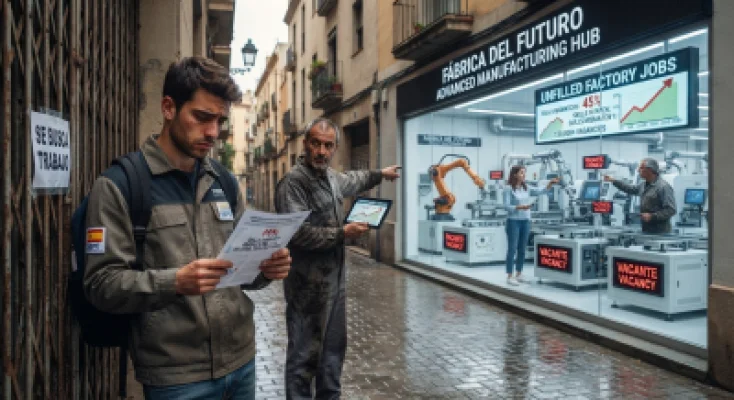
Spain faces a unique paradox: high unemployment coexists with hundreds of thousands of unfilled factory jobs. This guide explores the skills mismatch, geographic divides, and cultural perceptions driving this crisis, offering actionable strategies for manufacturers to build talent pipelines within Spain.
📊 Executive Summary
Spain presents a striking economic paradox in 2026: while the national unemployment rate remains stubbornly over 10%, manufacturers are desperately searching for workers to fill unfilled manufacturing jobs. This contradiction is driven by a severe skills mismatch, where the available workforce lacks the technical expertise required by modern factories. Furthermore, young Spanish workers increasingly avoid factory jobs, preferring the perceived flexibility and higher status of service or technology sectors. Manufacturing is often unfairly perceived as low-paid, physically demanding, and devoid of career progression. Geographic mismatches exacerbate the issue, with industrial hubs in the north and east facing labor shortages while southern regions suffer high unemployment. To solve this, Spanish manufacturers are investing heavily in upskilling programs, leveraging vocational training reforms, and forging partnerships with technical schools. This guide provides comprehensive strategies to attract, train, and retain workers, allowing factories to thrive without relocating operations.
The European Manufacturing Labor Crisis Context
Spain's paradox is a localized manifestation of the broader European manufacturing labor crisis, characterized by structural mismatches and shifting workforce preferences.
A significant gap between the skills possessed by the unemployed and those required by advanced manufacturing.
Manufacturing is viewed as outdated and physically taxing compared to service or tech roles.
Industrial jobs are concentrated in specific regions, leaving high-unemployment areas disconnected.
Historical preference for university degrees over technical apprenticeships.
Entry-level manufacturing wages have not kept pace with inflation or service sector alternatives.
Experienced workers are retiring, and insufficient young talent is entering the pipeline.
Rigid labor laws can discourage flexible hiring practices needed for modern production.
New regulations like CSRD sustainability reporting and REACH compliance costs add administrative strain. Additionally, external pressures like the CBAM carbon tax and new CSRD sustainability reporting or REACH compliance costs add administrative strain, while broader European issues like the 35-hour week, Belgian wage indexation, IG Metall wage demands, and a tight Dutch labor market show how regional policies impact competitiveness. Similarly, as Polish workers are returning home and Brexit drained UK manufacturing capacity, Spain must rely on its own workforce. Even Italian industrial zones face similar struggles, and if Spanish renewables haven't stabilized energy prices, manufacturers might lose the talent war entirely.
The Spanish Unemployment Paradox
Spain has high unemployment (over 10%) but many unfilled factory jobs, creating a paradox.
Spain has high unemployment (over 10%) but many unfilled factory jobs, creating a paradox that baffles economists and frustrates manufacturers.
This paradox is one of the most defining economic challenges in modern Spain. On one hand, the national unemployment rate consistently hovers above 10%, with youth unemployment remaining particularly acute. On the other hand, industrial associations report over 120,000 unfilled manufacturing jobs across the country. This contradiction highlights a profound structural flaw in the labor market. The unemployed individuals are not a homogeneous group; many lack the specific technical competencies required by modern, automated factories. Meanwhile, manufacturers cannot simply lower their hiring standards without compromising product quality and operational safety. This disconnect means that traditional macroeconomic stimuli, such as general job creation programs, are insufficient. The solution requires targeted interventions that bridge the gap between the available workforce and the specific demands of the industrial sector. Addressing this paradox is critical for Spain's long-term economic resilience and industrial competitiveness.
🎯 Resolving this paradox requires targeted, industry-specific interventions rather than broad macroeconomic policies.
The Skills Mismatch in Modern Factories
Unemployed workers lack the technical skills needed by modern factories, creating a severe mismatch.
The skills mismatch is a primary driver of the paradox, as unemployed workers lack the technical skills needed by modern factories.
Modern manufacturing is no longer about simple assembly line repetition; it requires a blend of mechanical aptitude, digital literacy, and problem-solving skills. Unfortunately, the current pool of unemployed workers in Spain often possesses skills that are obsolete or misaligned with these new demands. Many individuals have backgrounds in traditional sectors that have declined, such as construction or low-end services, and lack training in areas like CNC programming, industrial robotics, or advanced quality control. This mismatch creates a frustrating scenario: factories have the capital and the orders to expand, but they cannot find the human capital to execute the work. Conversely, job seekers apply for positions they are not qualified for, leading to high rejection rates and prolonged unemployment. Bridging this gap requires a fundamental shift in how skills are developed, moving away from generic training toward highly specialized, industry-co-designed curricula that directly address the technological realities of the modern factory floor.
| Required Skill | Current Workforce Availability | Gap Severity |
|---|---|---|
| CNC Programming | Low | Critical |
| Industrial Robotics Maintenance | Very Low | Critical |
| Advanced Quality Control | Moderate | High |
| Basic Assembly | High | Low |
| Digital Supply Chain Management | Low | High |
🎯 Closing the skills gap requires industry-led training programs that directly align with the technological demands of modern manufacturing.
Youth Preference for Service and Technology Jobs
Young Spanish workers prefer service and technology jobs over manufacturing careers.
A significant cultural shift has occurred, as young Spanish workers prefer service and technology jobs over manufacturing careers.
The aspirations of the Spanish youth have evolved dramatically over the past two decades. Unlike previous generations who viewed factory work as a stable path to the middle class, today's young adults are drawn to the perceived dynamism, flexibility, and higher social status of the service and technology sectors. The rise of the digital economy has created a plethora of jobs in marketing, software development, and customer success that are marketed as modern and progressive. In contrast, manufacturing struggles with an outdated image, often associated with rigid schedules, physical strain, and hierarchical management structures. This preference is evident in educational choices, with university enrollments in humanities and business outpacing technical and engineering degrees. Consequently, the manufacturing sector is losing the battle for young talent before they even enter the job market. Reversing this trend requires a comprehensive rebranding of the industry, highlighting its technological advancements, sustainability initiatives, and the genuine career opportunities it offers.
⏱️ Timeline
🎯 Reclaiming young talent requires a fundamental rebranding of manufacturing as a high-tech, dynamic, and rewarding career path.
Negative Perceptions of Manufacturing Careers
Manufacturing is perceived as low-paid, physically demanding, and without career progression.
A major barrier to recruitment is that manufacturing is perceived as low-paid, physically demanding, and without career progression.
These perceptions, whether entirely accurate or not, wield significant influence over job-seeking behavior. The 'low-paid' stereotype persists, even though many specialized manufacturing roles now offer salaries competitive with or exceeding those in the service sector. The 'physically demanding' label is a hangover from the pre-automation era; while some manual labor remains, modern factories are increasingly clean, climate-controlled, and reliant on collaborative robotics. The most damaging perception is the lack of career progression. Many young people believe that a factory job is a dead end, with no clear path to management or specialized roles. This is a failure of communication by the industry. Companies must actively showcase their internal mobility programs, tuition reimbursement for further education, and the diverse career trajectories available to those who start on the shop floor. Dispelling these myths is crucial for attracting a new generation of workers.
🎯 Manufacturers must actively dismantle these outdated stereotypes by showcasing modern realities and clear career pathways.
The Geographic Mismatch Challenge
Jobs are concentrated in regions with low unemployment, leaving other areas with high unemployment.
A geographic mismatch complicates the labor crisis, as jobs are concentrated in regions with low unemployment, leaving other areas with high unemployment.
Spain's industrial landscape is highly regionalized. The robust manufacturing hubs are primarily located in the Basque Country, Catalonia, and parts of Aragon and Navarre. These regions have successfully diversified their economies and maintain relatively low unemployment rates, meaning the local labor pool is already largely absorbed. Conversely, regions like Andalusia, Extremadura, and parts of Castilla-La Mancha suffer from structurally high unemployment but lack a significant industrial base to absorb this labor. Relocating workers from high-unemployment regions to low-unemployment industrial hubs is fraught with challenges, including housing costs, family ties, and cultural adjustments. Therefore, a purely geographic solution is insufficient. Instead, the focus must be on decentralizing industrial growth through incentives for companies to establish facilities in high-unemployment areas, coupled with robust remote-learning and local training initiatives that prepare the local workforce for the jobs that do exist.
Concentrated in Basque Country and Catalonia
Located in Andalusia and Extremadura, but seasonal
Potential for decentralization to rural areas
Highly specialized, concentrated in specific hubs
🎯 Addressing the geographic mismatch requires decentralized industrial policies and localized training initiatives.
Investing in Upskilling Local Workers
Spanish manufacturers are investing in training programs to upskill local workers.
To combat the skills mismatch, Spanish manufacturers are investing in training programs to upskill local workers.
Recognizing that waiting for the perfect candidate is a losing strategy, proactive manufacturers are taking talent development into their own hands. This involves creating robust, in-house academies and partnering with local employment services to identify candidates with foundational skills and a strong work ethic, regardless of their specific industrial background. These training programs focus on practical, hands-on experience with the specific machinery and software used in the facility. By investing in upskilling, companies not only fill their immediate vacancies but also foster deep loyalty and reduce turnover. Employees who are given the opportunity to learn and grow are more likely to stay with the company long-term. Furthermore, these initiatives can be partially subsidized by government and EU funds, making them a financially viable strategy for companies of all sizes. This shift from 'buying' talent to 'building' talent is essential for the long-term sustainability of the Spanish industrial sector.
In-House Academies
Dedicated training facilities within the factory to teach specific operational skills.
Foundational Hiring
Recruiting for attitude and work ethic, then training for specific technical skills.
Government Subsidies
Leveraging state and EU funds to offset the costs of employee training programs.
Clear Progression Paths
Linking training completion directly to promotions and salary increases.
🎯 Building talent from within through targeted upskilling is a sustainable and loyalty-building strategy for manufacturers.
Vocational Training Reforms and Apprenticeships
Vocational training reforms are making apprenticeships more attractive to young people.
Recent vocational training reforms are making apprenticeships more attractive, offering a viable alternative to traditional university paths.
Spain has historically suffered from a 'university-at-all-costs' mentality, which stigmatized vocational education. However, recent reforms to the Vocational Training (Formación Profesional, FP) system are beginning to change this narrative. The new dual FP model integrates classroom learning with paid, on-the-job training in companies, providing students with real-world experience and a steady income. This makes apprenticeships significantly more attractive to young people who are wary of accumulating university debt without guaranteed employment. Manufacturers are increasingly participating in these dual programs, helping to design curricula that meet their exact needs. By engaging with students early, companies can shape their skills and secure a pipeline of job-ready graduates. To maximize this opportunity, manufacturers must actively promote these programs in high schools, host open days, and ensure that the apprenticeship experience is mentorship-rich and engaging, thereby dismantling the old stigmas associated with vocational paths.
📋 Checklist
🎯 Embracing and actively promoting the dual vocational training model is key to securing a steady pipeline of young, skilled talent.
Improving Wages and Working Conditions
Improving wages and working conditions can make manufacturing jobs more appealing.
Fundamentally, improving wages and working conditions can make manufacturing jobs more appealing and competitive with other sectors.
While rebranding and training are essential, they cannot fully compensate for poor compensation and harsh working environments. To attract talent, Spanish manufacturers must ensure their total rewards packages are genuinely competitive. This means conducting regular market salary benchmarking and adjusting base pay to reflect the true value of the skills required. Beyond base salary, working conditions must be modernized. This includes investing in ergonomic workstations, improving climate control in production areas, and offering flexible scheduling options where operationally feasible. Additionally, enhancing non-monetary benefits such as comprehensive health insurance, generous paid time off, and robust retirement contributions can significantly boost a company's attractiveness. When workers feel valued, safe, and fairly compensated, the perceived drawbacks of factory work diminish, and the industry becomes a much more viable and attractive career choice for a broader demographic.
🎯 Competitive compensation and modern, humane working conditions are non-negotiable foundations for attracting and retaining industrial talent.
Building Talent Pipelines with Universities
Partnerships with universities and technical schools are building talent pipelines.
Strategic partnerships with universities and technical schools are essential for building sustainable talent pipelines for the future.
Manufacturers cannot wait until graduation day to start recruiting; they must engage with educational institutions years in advance. By forming formal partnerships with local universities and technical schools, companies can influence the curriculum, ensuring that students are learning the most relevant and up-to-date skills. These partnerships can take many forms, including sponsoring research projects, providing guest lecturers from the industry, and offering capstone projects that solve real-world factory problems. This early engagement serves a dual purpose: it elevates the quality of the education provided, and it allows companies to identify and cultivate top talent before they enter the open job market. Furthermore, these collaborations enhance the company's brand among students, positioning the manufacturer as an innovative and desirable employer. For this to be effective, companies must commit long-term resources to these relationships, treating them as strategic investments rather than mere corporate social responsibility exercises.
✅ Pros
- Early access to top-tier, pre-vetted talent
- Direct influence on curriculum to ensure skill relevance
- Enhanced employer brand and reputation among students
❌ Cons
- Requires significant, long-term financial and time investment
- Results are not immediate; it is a long-term strategy
- Coordination with academic calendars and bureaucracies can be slow
🎯 Long-term, resource-backed partnerships with educational institutions are the most effective way to secure a future-ready workforce.
Strategies to Solve the Paradox Within Spain
This guide provides Spanish manufacturers with strategies to solve the paradox within Spain.
This guide provides Spanish manufacturers with actionable strategies to solve the paradox within Spain, ensuring long-term industrial viability.
Solving Spain's manufacturing labor paradox requires a holistic, multi-pronged approach. Manufacturers must stop viewing labor as a mere commodity and start treating it as their most critical strategic asset. First, invest heavily in internal upskilling to bridge the immediate skills gap. Second, actively champion and participate in the dual vocational training system to build the pipeline of tomorrow. Third, modernize the workplace by offering competitive wages, flexible scheduling, and ergonomic environments that rival the service sector. Fourth, forge deep, meaningful partnerships with local educational institutions to co-create the curriculum and identify talent early. Finally, launch aggressive, authentic rebranding campaigns that showcase the high-tech, innovative, and rewarding reality of modern manufacturing. By executing these strategies in concert, Spanish manufacturers can transform the labor paradox from an existential threat into a competitive advantage, securing their future without the need to relocate operations abroad.
"The companies that will thrive in the next decade are those that realize their greatest competitive advantage is not their machinery, but their ability to attract, develop, and retain human talent."
🎯 A coordinated, strategic commitment to talent development and workplace modernization is the only path to resolving the Spanish manufacturing labor paradox.
💡 Key Takeaways
- Treat human talent as the primary strategic asset, not a commodity.
- A holistic approach combining training, modernization, and partnerships is essential.
European Union Support Mechanisms
The EU provides frameworks and funding to help member states address structural labor challenges and enhance industrial competitiveness.
Provides significant funding for upskilling, reskilling, and active labor market policies to support workers in transition.
A flagship initiative to promote a culture of lifelong learning and build large-scale skills partnerships in strategic industrial ecosystems.
Challenges in Implementing EU Solutions
Despite available frameworks, practical implementation at the national and factory level faces significant bureaucratic and structural hurdles.
⚠️ Complex application procedures and strict reporting requirements deter smaller manufacturers from accessing these vital funds.
⚠️ Lack of awareness and limited capacity to coordinate large-scale upskilling consortia among competing SMEs.
Manufacturing Labor Terminology
Frequently Asked Questions
❓ Why does Spain have high unemployment but also unfilled factory jobs?
This paradox is primarily caused by a severe skills mismatch, where the unemployed lack the technical expertise required by modern, automated factories, alongside geographic and cultural barriers.
❓ Why do young Spanish workers avoid manufacturing careers?
Manufacturing is often perceived as low-paid, physically demanding, and lacking career progression, while service and technology sectors are viewed as more modern and flexible.
❓ How can manufacturers bridge the skills gap?
By investing in robust in-house upskilling programs and partnering with vocational schools to co-design curricula that meet specific industry needs.
❓ What is the dual vocational training model?
It is a system where students split their time between classroom learning and paid, practical work experience in a company, making apprenticeships more attractive.
❓ Can improving wages alone solve the labor shortage?
While competitive wages are essential, they must be combined with modernized working conditions, clear career pathways, and a positive company culture to be truly effective.
❓ How does the geographic mismatch affect hiring?
Industrial jobs are concentrated in specific regions with low unemployment, making it difficult to attract workers from high-unemployment areas due to relocation costs and family ties.
❓ What role do universities play in solving this crisis?
Universities and technical schools are crucial for building long-term talent pipelines through research partnerships, guest lectures, and tailored capstone projects.
❓ Are there EU funds available to help Spanish manufacturers?
Yes, programs like the European Social Fund Plus (ESF+) offer financial support for training and upskilling, though navigating the application process can be complex.