
 AR
 DE
 FR
 IT
Why UK Manufacturers Pay Higher Tariffs Post-Brexit
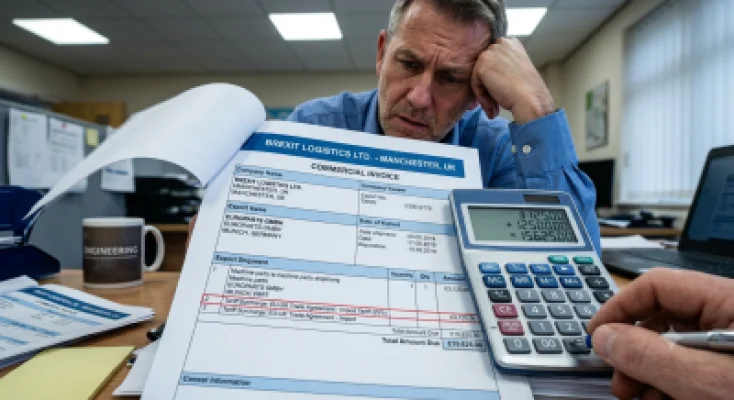
Introduction
Why UK Manufacturers Pay Higher Tariffs Post-Brexit
Tariffs and compliance costs are pricing British manufacturers out of European markets.
UK manufacturers are paying significantly more to sell into the European Union after Brexit, driven by strict rules of origin requirements and complex new compliance costs. This comprehensive guide provides actionable, data-driven strategies to reduce tariff burdens, optimize supply chains, and navigate the new trade reality effectively for long-term survival.
📊 Executive Summary
UK manufacturers are facing a severe competitive disadvantage, paying up to twenty-five percent more to sell goods into the European Union following the full implementation of the Trade and Cooperation Agreement. While the agreement theoretically allows for zero tariffs, this benefit is strictly conditional on products meeting complex rules of origin requirements. Many UK manufacturers, particularly those relying on intricate global supply chains, cannot prove sufficient local content, leading to unexpected tariff applications of five to twenty-five percent on their exports. This sudden cost increase is severely eroding profit margins across the sector. To remain competitive, some manufacturers are forced to absorb these costs, while others are raising prices and losing market share to EU-based competitors. Establishing EU-based operations, utilizing third-party logistics, and mastering rules of origin documentation are now essential strategies for survival. This guide outlines practical, data-driven steps for UK manufacturers to mitigate these tariff costs, optimize their supply chains, and maintain their presence in European markets effectively.
Proposed Solutions for Trade Friction
To address the mounting challenges, several solutions have been proposed by industry bodies and government agencies to help UK manufacturers navigate the post-Brexit landscape. One primary strategy is the establishment of EU-based operations or the use of third-party logistics providers within the EU to bypass border checks and rules of origin issues entirely. Additionally, the government has introduced various grant programs aimed at helping small and medium-sized enterprises cover the initial costs of customs training and compliance software. Industry associations are also promoting the use of digital trade platforms that streamline the documentation process and provide real-time updates on regulatory changes. Furthermore, there is a strong push for manufacturers to redesign their supply chains to source more components locally, thereby ensuring they meet the rules of origin requirements and qualify for zero tariffs. These solutions aim to restore some level of competitiveness and operational stability for affected businesses in the long term.
Streamline documentation and provide real-time regulatory updates.
Source more components locally to meet origin rules.
Financial aid for customs training and software.
Why Current Trade Solutions Fail
Despite these well-intentioned proposals, current solutions are failing to adequately resolve the friction faced by UK manufacturers. Establishing EU-based operations is prohibitively expensive for small and medium-sized enterprises, effectively locking them out of this strategy and leaving them to bear the full brunt of trade barriers. Government grant programs are often criticized for being overly bureaucratic, with complex application processes that deter the very businesses they are designed to help. Digital trade platforms, while useful, frequently suffer from interoperability issues with legacy systems used by smaller manufacturers, limiting their adoption. Furthermore, redesigning supply chains to source locally is a massive undertaking that requires significant capital investment and time, which many companies simply do not have. Consequently, these solutions operate in a vacuum, offering theoretical relief while the daily reality of tariffs and delays continues to cripple UK manufacturing competitiveness across the board.
⚠️ Prohibitively expensive for small and medium enterprises.
⚠️ Overly bureaucratic application processes deter applicants.
⚠️ Requires significant capital investment and time.
⚠️ Interoperability issues with legacy manufacturing systems.
Glossary of Trade Terms
Frequently Asked Questions on Tariffs
❓ Why are UK manufacturers paying higher tariffs?
Failure to meet rules of origin requirements triggers duties up to 25%.
❓ What is the rules of origin requirement?
Products must contain sufficient local UK or EU content to qualify for zero tariffs.
❓ How can SMEs reduce compliance costs?
By leveraging government grants and utilizing digital trade platforms.
❓ Is establishing an EU operation viable?
Yes, for large enterprises, it bypasses border checks and rules of origin issues.
❓ What is the UKCA marking?
A new product marking required for goods sold in Great Britain.